


Most retailers in Australia and New Zealand cannot tell you, with any precision, how much revenue their search bar is quietly losing.Yet 77%of Australian shopping journeys begin with a search query, and when that query fails, the shopper rarely returns.For a $100M online retailer, the gap between a poorly tuned search experience and a well-tuned one can sit between $15M and $30M in unrealised revenue every year. The encouraging news is that the first step in closing that gap is not selecting a vendor or signing a six-figure contract. It is running five practical tests on your own storefront tonight.

Why Storefront Search Is the Most Undervalued Asset in Retail
For two decades, the search bar has been treated asu tility infrastructure: a checkbox feature delivered by the ecommerce platform,configured once, and rarely revisited. That assumption is now actively damaging revenue.
Industry research shows that 39% of shoppers abandon an ecommerce site entirely after a failed search interaction. A failed interaction is rarely a missing product; it is usually a relevant product the engine could not surface because the shopper's language and the catalogue's language did not match. Multiply that 39% across the volume of search-ledsessions, apply your average order value, and the numbers become uncomfortable quickly.
The cost of a keyword-era search engine
Most A/NZ retailers still run pattern-matching searchengines. They look for exact or near-exact matches between the words a customer types and the words in your product titles, descriptions, and tags. They do nothandle context, intent, or the natural way a shopper describes what they want.
That gap is where revenue leaks. A shopper searchingf or “comfortable shoes for standing all day” receives a list filtered only on“comfortable.” A shopper looking for “dress for a Sydney summer wedding” getsevery dress in the catalogue. A shopper looking for “couch that fits a small apartment” sees every couch you stock. These shoppers either bounce, browse without buying, or, if they are loyal, work around the limitation. The retailers that have closed this gap are recovering 15–30% conversion uplift, according to McKinsey research.The retailers that have not are losing those same customers to the competitor whose search bar understood the query.
Five Tests You Can Run on Your Storefront Tonight
You do not need a consultant, a vendor demo, or a new dashboard to begin understanding the scale of the problem. These five tests canbe run by any retail leader, on any device, in under an hour.

1. Zero-results rate. Of the queries customers run on your site each week,what percentage return no results? A healthy storefront sits under 5%. Anything above 10% is a structural problem with synonym handling, catalogue gaps, orboth.
2. Synonym coverage. Run ten of your top long-tail queries with their common variants. Does “jumper” return the same products as “sweater”? Does “trainers”match “sneakers”? Mismatches here indicate that your catalogue indexing has not kept pace with how customers actually search.
3. Intent-led queries. Type three natural-language queries into your search bar: “comfortable shoes for standing all day,” “something for a 30-degree day,”“gift for a 10-year-old who likes science.” Keyword engines fail visibly ont hese queries. If your results look like a generic category dump, you are losing high-intent shoppers.
4. Mobile search latency. Time the gap between tapping search and seeing results on a 4G connection. Anything above 800 milliseconds creates measurable conversion drag, particularly on smaller screens where shopping patience is already thinner.
5. Search-to-productconversion. Of users who run a searchquery, what percentage click a result? Healthy retailers see 60% or higher.Below 50% suggests your relevance model is not landing the results customers expect to see.
Translating gaps into revenue numbers
The diagnostic value of these tests is not in the tests themselves; it is in what they reveal about the revenue you are leaving on the table. If your zero-results rate is 12%, and search drives 40% of yoursessions, you are losing roughly 5% of total traffic to a fixable problem.Apply your conversion rate, average order value, and traffic volume, and the lost revenue becomes a number you can take to a CFO. That number is almost always larger than the cost of fixing it.
From Audit to Action
A self-audit is the start of the conversation, not the end. The harder questions sit beyond it: which vendor path makes sense, how to fix the underlying product data, who owns the merchandising governance. That is where most retailers stall, and where most projects either succeed or quietly underdeliver.
In our next post, Beyond Keywords: What Intent-BasedAI Search Actually Does Differently, we will walk through what changes whenpattern-matching is replaced with intent-based search, using three real queriesany A/NZ retailer can run against their own catalogue.
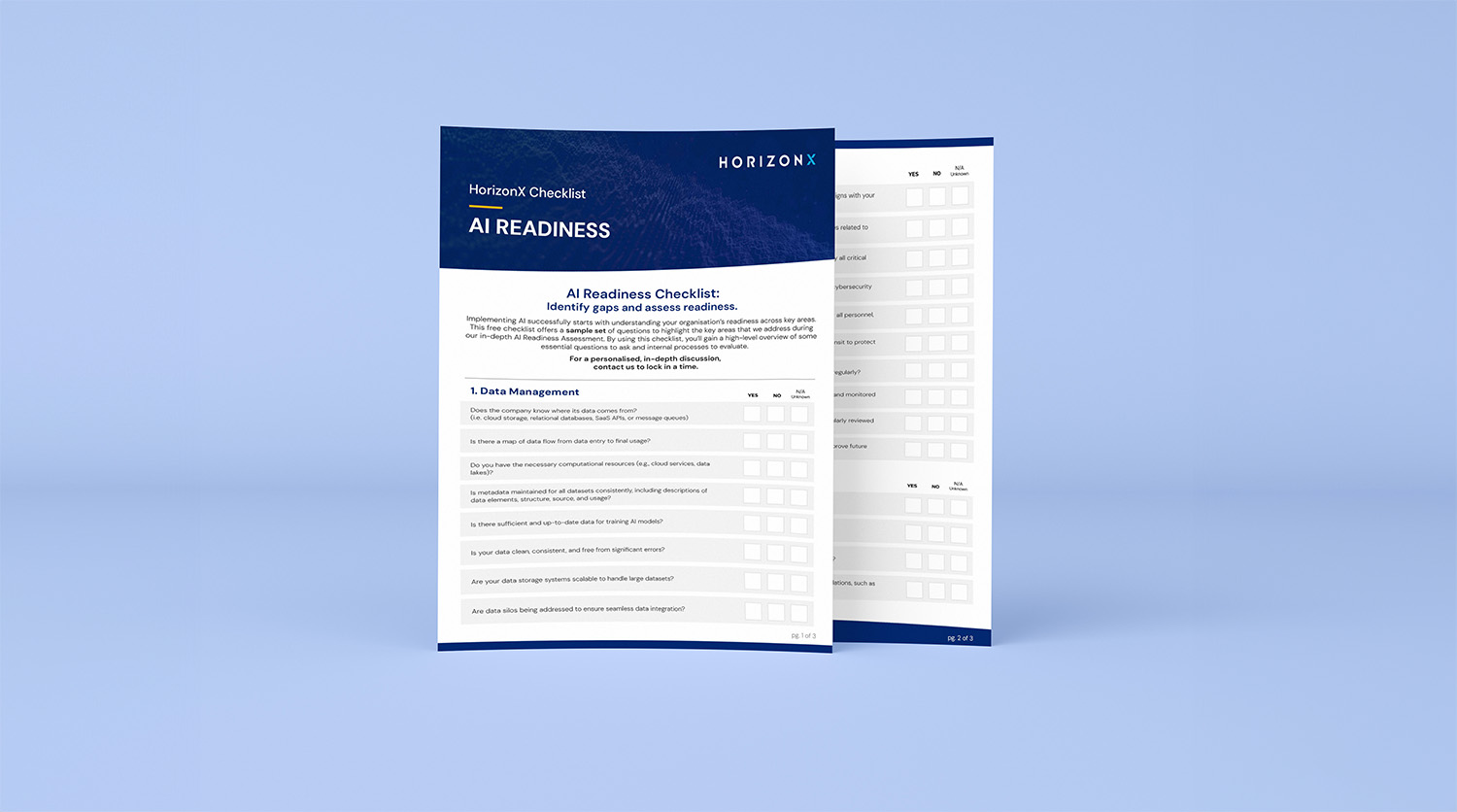
If you would like to quantify the revenue impact of the gaps your self-audit surfaces, our AI Search Revenue Leak Checklist is a free diagnostic resource designed to helpmid-market retailers do exactly that. If you would prefer a structured assessment with our team, contact us. We offer a complimentary AI Search Diagnostic that maps your current search maturity, the revenue at risk, and the highest-ROI fixes.
Subscribe for insights
Most retailers in Australia and New Zealand cannot tell you, with any precision, how much revenue their search bar is quietly losing.Yet 77%of Australian shopping journeys begin with a search query, and when that query fails, the shopper rarely returns.For a $100M online retailer, the gap between a poorly tuned search experience and a well-tuned one can sit between $15M and $30M in unrealised revenue every year. The encouraging news is that the first step in closing that gap is not selecting a vendor or signing a six-figure contract. It is running five practical tests on your own storefront tonight.
Why Storefront Search Is the Most Undervalued Asset in Retail
For two decades, the search bar has been treated asu tility infrastructure: a checkbox feature delivered by the ecommerce platform,configured once, and rarely revisited. That assumption is now actively damaging revenue.
Industry research shows that 39% of shoppers abandon an ecommerce site entirely after a failed search interaction. A failed interaction is rarely a missing product; it is usually a relevant product the engine could not surface because the shopper's language and the catalogue's language did not match. Multiply that 39% across the volume of search-ledsessions, apply your average order value, and the numbers become uncomfortable quickly.
The cost of a keyword-era search engine
Most A/NZ retailers still run pattern-matching searchengines. They look for exact or near-exact matches between the words a customer types and the words in your product titles, descriptions, and tags. They do nothandle context, intent, or the natural way a shopper describes what they want.
That gap is where revenue leaks. A shopper searchingf or “comfortable shoes for standing all day” receives a list filtered only on“comfortable.” A shopper looking for “dress for a Sydney summer wedding” getsevery dress in the catalogue. A shopper looking for “couch that fits a small apartment” sees every couch you stock. These shoppers either bounce, browse without buying, or, if they are loyal, work around the limitation. The retailers that have closed this gap are recovering 15–30% conversion uplift, according to McKinsey research.The retailers that have not are losing those same customers to the competitor whose search bar understood the query.
Five Tests You Can Run on Your Storefront Tonight
You do not need a consultant, a vendor demo, or a new dashboard to begin understanding the scale of the problem. These five tests canbe run by any retail leader, on any device, in under an hour.
1. Zero-results rate. Of the queries customers run on your site each week,what percentage return no results? A healthy storefront sits under 5%. Anything above 10% is a structural problem with synonym handling, catalogue gaps, orboth.
2. Synonym coverage. Run ten of your top long-tail queries with their common variants. Does “jumper” return the same products as “sweater”? Does “trainers”match “sneakers”? Mismatches here indicate that your catalogue indexing has not kept pace with how customers actually search.
3. Intent-led queries. Type three natural-language queries into your search bar: “comfortable shoes for standing all day,” “something for a 30-degree day,”“gift for a 10-year-old who likes science.” Keyword engines fail visibly ont hese queries. If your results look like a generic category dump, you are losing high-intent shoppers.
4. Mobile search latency. Time the gap between tapping search and seeing results on a 4G connection. Anything above 800 milliseconds creates measurable conversion drag, particularly on smaller screens where shopping patience is already thinner.
5. Search-to-productconversion. Of users who run a searchquery, what percentage click a result? Healthy retailers see 60% or higher.Below 50% suggests your relevance model is not landing the results customers expect to see.
Translating gaps into revenue numbers
The diagnostic value of these tests is not in the tests themselves; it is in what they reveal about the revenue you are leaving on the table. If your zero-results rate is 12%, and search drives 40% of yoursessions, you are losing roughly 5% of total traffic to a fixable problem.Apply your conversion rate, average order value, and traffic volume, and the lost revenue becomes a number you can take to a CFO. That number is almost always larger than the cost of fixing it.
From Audit to Action
A self-audit is the start of the conversation, not the end. The harder questions sit beyond it: which vendor path makes sense, how to fix the underlying product data, who owns the merchandising governance. That is where most retailers stall, and where most projects either succeed or quietly underdeliver.
In our next post, Beyond Keywords: What Intent-BasedAI Search Actually Does Differently, we will walk through what changes whenpattern-matching is replaced with intent-based search, using three real queriesany A/NZ retailer can run against their own catalogue.
If you would like to quantify the revenue impact of the gaps your self-audit surfaces, our AI Search Revenue Leak Checklist is a free diagnostic resource designed to helpmid-market retailers do exactly that. If you would prefer a structured assessment with our team, contact us. We offer a complimentary AI Search Diagnostic that maps your current search maturity, the revenue at risk, and the highest-ROI fixes.
Most retailers in Australia and New Zealand cannot tell you, with any precision, how much revenue their search bar is quietly losing.Yet 77%of Australian shopping journeys begin with a search query, and when that query fails, the shopper rarely returns.For a $100M online retailer, the gap between a poorly tuned search experience and a well-tuned one can sit between $15M and $30M in unrealised revenue every year. The encouraging news is that the first step in closing that gap is not selecting a vendor or signing a six-figure contract. It is running five practical tests on your own storefront tonight.
Why Storefront Search Is the Most Undervalued Asset in Retail
For two decades, the search bar has been treated asu tility infrastructure: a checkbox feature delivered by the ecommerce platform,configured once, and rarely revisited. That assumption is now actively damaging revenue.
Industry research shows that 39% of shoppers abandon an ecommerce site entirely after a failed search interaction. A failed interaction is rarely a missing product; it is usually a relevant product the engine could not surface because the shopper's language and the catalogue's language did not match. Multiply that 39% across the volume of search-ledsessions, apply your average order value, and the numbers become uncomfortable quickly.
The cost of a keyword-era search engine
Most A/NZ retailers still run pattern-matching searchengines. They look for exact or near-exact matches between the words a customer types and the words in your product titles, descriptions, and tags. They do nothandle context, intent, or the natural way a shopper describes what they want.
That gap is where revenue leaks. A shopper searchingf or “comfortable shoes for standing all day” receives a list filtered only on“comfortable.” A shopper looking for “dress for a Sydney summer wedding” getsevery dress in the catalogue. A shopper looking for “couch that fits a small apartment” sees every couch you stock. These shoppers either bounce, browse without buying, or, if they are loyal, work around the limitation. The retailers that have closed this gap are recovering 15–30% conversion uplift, according to McKinsey research.The retailers that have not are losing those same customers to the competitor whose search bar understood the query.
Five Tests You Can Run on Your Storefront Tonight
You do not need a consultant, a vendor demo, or a new dashboard to begin understanding the scale of the problem. These five tests canbe run by any retail leader, on any device, in under an hour.
1. Zero-results rate. Of the queries customers run on your site each week,what percentage return no results? A healthy storefront sits under 5%. Anything above 10% is a structural problem with synonym handling, catalogue gaps, orboth.
2. Synonym coverage. Run ten of your top long-tail queries with their common variants. Does “jumper” return the same products as “sweater”? Does “trainers”match “sneakers”? Mismatches here indicate that your catalogue indexing has not kept pace with how customers actually search.
3. Intent-led queries. Type three natural-language queries into your search bar: “comfortable shoes for standing all day,” “something for a 30-degree day,”“gift for a 10-year-old who likes science.” Keyword engines fail visibly ont hese queries. If your results look like a generic category dump, you are losing high-intent shoppers.
4. Mobile search latency. Time the gap between tapping search and seeing results on a 4G connection. Anything above 800 milliseconds creates measurable conversion drag, particularly on smaller screens where shopping patience is already thinner.
5. Search-to-productconversion. Of users who run a searchquery, what percentage click a result? Healthy retailers see 60% or higher.Below 50% suggests your relevance model is not landing the results customers expect to see.
Translating gaps into revenue numbers
The diagnostic value of these tests is not in the tests themselves; it is in what they reveal about the revenue you are leaving on the table. If your zero-results rate is 12%, and search drives 40% of yoursessions, you are losing roughly 5% of total traffic to a fixable problem.Apply your conversion rate, average order value, and traffic volume, and the lost revenue becomes a number you can take to a CFO. That number is almost always larger than the cost of fixing it.
From Audit to Action
A self-audit is the start of the conversation, not the end. The harder questions sit beyond it: which vendor path makes sense, how to fix the underlying product data, who owns the merchandising governance. That is where most retailers stall, and where most projects either succeed or quietly underdeliver.
In our next post, Beyond Keywords: What Intent-BasedAI Search Actually Does Differently, we will walk through what changes whenpattern-matching is replaced with intent-based search, using three real queriesany A/NZ retailer can run against their own catalogue.
If you would like to quantify the revenue impact of the gaps your self-audit surfaces, our AI Search Revenue Leak Checklist is a free diagnostic resource designed to helpmid-market retailers do exactly that. If you would prefer a structured assessment with our team, contact us. We offer a complimentary AI Search Diagnostic that maps your current search maturity, the revenue at risk, and the highest-ROI fixes.
The Hidden Revenue Leak: How to Audit Your Storefront Search in Under an Hour
Most retailers in Australia and New Zealand cannot tell you, with any precision, how much revenue their search bar is quietly losing.Yet 77%of Australian shopping journeys begin with a search query, and when that query fails, the shopper rarely returns.For a $100M online retailer, the gap between a poorly tuned search experience and a well-tuned one can sit between $15M and $30M in unrealised revenue every year. The encouraging news is that the first step in closing that gap is not selecting a vendor or signing a six-figure contract. It is running five practical tests on your own storefront tonight.
Why Storefront Search Is the Most Undervalued Asset in Retail
For two decades, the search bar has been treated asu tility infrastructure: a checkbox feature delivered by the ecommerce platform,configured once, and rarely revisited. That assumption is now actively damaging revenue.
Industry research shows that 39% of shoppers abandon an ecommerce site entirely after a failed search interaction. A failed interaction is rarely a missing product; it is usually a relevant product the engine could not surface because the shopper's language and the catalogue's language did not match. Multiply that 39% across the volume of search-ledsessions, apply your average order value, and the numbers become uncomfortable quickly.
The cost of a keyword-era search engine
Most A/NZ retailers still run pattern-matching searchengines. They look for exact or near-exact matches between the words a customer types and the words in your product titles, descriptions, and tags. They do nothandle context, intent, or the natural way a shopper describes what they want.
That gap is where revenue leaks. A shopper searchingf or “comfortable shoes for standing all day” receives a list filtered only on“comfortable.” A shopper looking for “dress for a Sydney summer wedding” getsevery dress in the catalogue. A shopper looking for “couch that fits a small apartment” sees every couch you stock. These shoppers either bounce, browse without buying, or, if they are loyal, work around the limitation. The retailers that have closed this gap are recovering 15–30% conversion uplift, according to McKinsey research.The retailers that have not are losing those same customers to the competitor whose search bar understood the query.
Five Tests You Can Run on Your Storefront Tonight
You do not need a consultant, a vendor demo, or a new dashboard to begin understanding the scale of the problem. These five tests canbe run by any retail leader, on any device, in under an hour.
1. Zero-results rate. Of the queries customers run on your site each week,what percentage return no results? A healthy storefront sits under 5%. Anything above 10% is a structural problem with synonym handling, catalogue gaps, orboth.
2. Synonym coverage. Run ten of your top long-tail queries with their common variants. Does “jumper” return the same products as “sweater”? Does “trainers”match “sneakers”? Mismatches here indicate that your catalogue indexing has not kept pace with how customers actually search.
3. Intent-led queries. Type three natural-language queries into your search bar: “comfortable shoes for standing all day,” “something for a 30-degree day,”“gift for a 10-year-old who likes science.” Keyword engines fail visibly ont hese queries. If your results look like a generic category dump, you are losing high-intent shoppers.
4. Mobile search latency. Time the gap between tapping search and seeing results on a 4G connection. Anything above 800 milliseconds creates measurable conversion drag, particularly on smaller screens where shopping patience is already thinner.
5. Search-to-productconversion. Of users who run a searchquery, what percentage click a result? Healthy retailers see 60% or higher.Below 50% suggests your relevance model is not landing the results customers expect to see.
Translating gaps into revenue numbers
The diagnostic value of these tests is not in the tests themselves; it is in what they reveal about the revenue you are leaving on the table. If your zero-results rate is 12%, and search drives 40% of yoursessions, you are losing roughly 5% of total traffic to a fixable problem.Apply your conversion rate, average order value, and traffic volume, and the lost revenue becomes a number you can take to a CFO. That number is almost always larger than the cost of fixing it.
From Audit to Action
A self-audit is the start of the conversation, not the end. The harder questions sit beyond it: which vendor path makes sense, how to fix the underlying product data, who owns the merchandising governance. That is where most retailers stall, and where most projects either succeed or quietly underdeliver.
In our next post, Beyond Keywords: What Intent-BasedAI Search Actually Does Differently, we will walk through what changes whenpattern-matching is replaced with intent-based search, using three real queriesany A/NZ retailer can run against their own catalogue.
If you would like to quantify the revenue impact of the gaps your self-audit surfaces, our AI Search Revenue Leak Checklist is a free diagnostic resource designed to helpmid-market retailers do exactly that. If you would prefer a structured assessment with our team, contact us. We offer a complimentary AI Search Diagnostic that maps your current search maturity, the revenue at risk, and the highest-ROI fixes.
Thank you for submitting the form. The resource has been sent to your email.
The Hidden Revenue Leak: How to Audit Your Storefront Search in Under an Hour
Most retailers in Australia and New Zealand cannot tell you, with any precision, how much revenue their search bar is quietly losing.Yet 77%of Australian shopping journeys begin with a search query, and when that query fails, the shopper rarely returns.For a $100M online retailer, the gap between a poorly tuned search experience and a well-tuned one can sit between $15M and $30M in unrealised revenue every year. The encouraging news is that the first step in closing that gap is not selecting a vendor or signing a six-figure contract. It is running five practical tests on your own storefront tonight.
Why Storefront Search Is the Most Undervalued Asset in Retail
For two decades, the search bar has been treated asu tility infrastructure: a checkbox feature delivered by the ecommerce platform,configured once, and rarely revisited. That assumption is now actively damaging revenue.
Industry research shows that 39% of shoppers abandon an ecommerce site entirely after a failed search interaction. A failed interaction is rarely a missing product; it is usually a relevant product the engine could not surface because the shopper's language and the catalogue's language did not match. Multiply that 39% across the volume of search-ledsessions, apply your average order value, and the numbers become uncomfortable quickly.
The cost of a keyword-era search engine
Most A/NZ retailers still run pattern-matching searchengines. They look for exact or near-exact matches between the words a customer types and the words in your product titles, descriptions, and tags. They do nothandle context, intent, or the natural way a shopper describes what they want.
That gap is where revenue leaks. A shopper searchingf or “comfortable shoes for standing all day” receives a list filtered only on“comfortable.” A shopper looking for “dress for a Sydney summer wedding” getsevery dress in the catalogue. A shopper looking for “couch that fits a small apartment” sees every couch you stock. These shoppers either bounce, browse without buying, or, if they are loyal, work around the limitation. The retailers that have closed this gap are recovering 15–30% conversion uplift, according to McKinsey research.The retailers that have not are losing those same customers to the competitor whose search bar understood the query.
Five Tests You Can Run on Your Storefront Tonight
You do not need a consultant, a vendor demo, or a new dashboard to begin understanding the scale of the problem. These five tests canbe run by any retail leader, on any device, in under an hour.
1. Zero-results rate. Of the queries customers run on your site each week,what percentage return no results? A healthy storefront sits under 5%. Anything above 10% is a structural problem with synonym handling, catalogue gaps, orboth.
2. Synonym coverage. Run ten of your top long-tail queries with their common variants. Does “jumper” return the same products as “sweater”? Does “trainers”match “sneakers”? Mismatches here indicate that your catalogue indexing has not kept pace with how customers actually search.
3. Intent-led queries. Type three natural-language queries into your search bar: “comfortable shoes for standing all day,” “something for a 30-degree day,”“gift for a 10-year-old who likes science.” Keyword engines fail visibly ont hese queries. If your results look like a generic category dump, you are losing high-intent shoppers.
4. Mobile search latency. Time the gap between tapping search and seeing results on a 4G connection. Anything above 800 milliseconds creates measurable conversion drag, particularly on smaller screens where shopping patience is already thinner.
5. Search-to-productconversion. Of users who run a searchquery, what percentage click a result? Healthy retailers see 60% or higher.Below 50% suggests your relevance model is not landing the results customers expect to see.
Translating gaps into revenue numbers
The diagnostic value of these tests is not in the tests themselves; it is in what they reveal about the revenue you are leaving on the table. If your zero-results rate is 12%, and search drives 40% of yoursessions, you are losing roughly 5% of total traffic to a fixable problem.Apply your conversion rate, average order value, and traffic volume, and the lost revenue becomes a number you can take to a CFO. That number is almost always larger than the cost of fixing it.
From Audit to Action
A self-audit is the start of the conversation, not the end. The harder questions sit beyond it: which vendor path makes sense, how to fix the underlying product data, who owns the merchandising governance. That is where most retailers stall, and where most projects either succeed or quietly underdeliver.
In our next post, Beyond Keywords: What Intent-BasedAI Search Actually Does Differently, we will walk through what changes whenpattern-matching is replaced with intent-based search, using three real queriesany A/NZ retailer can run against their own catalogue.
If you would like to quantify the revenue impact of the gaps your self-audit surfaces, our AI Search Revenue Leak Checklist is a free diagnostic resource designed to helpmid-market retailers do exactly that. If you would prefer a structured assessment with our team, contact us. We offer a complimentary AI Search Diagnostic that maps your current search maturity, the revenue at risk, and the highest-ROI fixes.
The Hidden Revenue Leak: How to Audit Your Storefront Search in Under an Hour
Most retailers in Australia and New Zealand cannot tell you, with any precision, how much revenue their search bar is quietly losing.Yet 77%of Australian shopping journeys begin with a search query, and when that query fails, the shopper rarely returns.For a $100M online retailer, the gap between a poorly tuned search experience and a well-tuned one can sit between $15M and $30M in unrealised revenue every year. The encouraging news is that the first step in closing that gap is not selecting a vendor or signing a six-figure contract. It is running five practical tests on your own storefront tonight.
Why Storefront Search Is the Most Undervalued Asset in Retail
For two decades, the search bar has been treated asu tility infrastructure: a checkbox feature delivered by the ecommerce platform,configured once, and rarely revisited. That assumption is now actively damaging revenue.
Industry research shows that 39% of shoppers abandon an ecommerce site entirely after a failed search interaction. A failed interaction is rarely a missing product; it is usually a relevant product the engine could not surface because the shopper's language and the catalogue's language did not match. Multiply that 39% across the volume of search-ledsessions, apply your average order value, and the numbers become uncomfortable quickly.
The cost of a keyword-era search engine
Most A/NZ retailers still run pattern-matching searchengines. They look for exact or near-exact matches between the words a customer types and the words in your product titles, descriptions, and tags. They do nothandle context, intent, or the natural way a shopper describes what they want.
That gap is where revenue leaks. A shopper searchingf or “comfortable shoes for standing all day” receives a list filtered only on“comfortable.” A shopper looking for “dress for a Sydney summer wedding” getsevery dress in the catalogue. A shopper looking for “couch that fits a small apartment” sees every couch you stock. These shoppers either bounce, browse without buying, or, if they are loyal, work around the limitation. The retailers that have closed this gap are recovering 15–30% conversion uplift, according to McKinsey research.The retailers that have not are losing those same customers to the competitor whose search bar understood the query.
Five Tests You Can Run on Your Storefront Tonight
You do not need a consultant, a vendor demo, or a new dashboard to begin understanding the scale of the problem. These five tests canbe run by any retail leader, on any device, in under an hour.
1. Zero-results rate. Of the queries customers run on your site each week,what percentage return no results? A healthy storefront sits under 5%. Anything above 10% is a structural problem with synonym handling, catalogue gaps, orboth.
2. Synonym coverage. Run ten of your top long-tail queries with their common variants. Does “jumper” return the same products as “sweater”? Does “trainers”match “sneakers”? Mismatches here indicate that your catalogue indexing has not kept pace with how customers actually search.
3. Intent-led queries. Type three natural-language queries into your search bar: “comfortable shoes for standing all day,” “something for a 30-degree day,”“gift for a 10-year-old who likes science.” Keyword engines fail visibly ont hese queries. If your results look like a generic category dump, you are losing high-intent shoppers.
4. Mobile search latency. Time the gap between tapping search and seeing results on a 4G connection. Anything above 800 milliseconds creates measurable conversion drag, particularly on smaller screens where shopping patience is already thinner.
5. Search-to-productconversion. Of users who run a searchquery, what percentage click a result? Healthy retailers see 60% or higher.Below 50% suggests your relevance model is not landing the results customers expect to see.
Translating gaps into revenue numbers
The diagnostic value of these tests is not in the tests themselves; it is in what they reveal about the revenue you are leaving on the table. If your zero-results rate is 12%, and search drives 40% of yoursessions, you are losing roughly 5% of total traffic to a fixable problem.Apply your conversion rate, average order value, and traffic volume, and the lost revenue becomes a number you can take to a CFO. That number is almost always larger than the cost of fixing it.
From Audit to Action
A self-audit is the start of the conversation, not the end. The harder questions sit beyond it: which vendor path makes sense, how to fix the underlying product data, who owns the merchandising governance. That is where most retailers stall, and where most projects either succeed or quietly underdeliver.
In our next post, Beyond Keywords: What Intent-BasedAI Search Actually Does Differently, we will walk through what changes whenpattern-matching is replaced with intent-based search, using three real queriesany A/NZ retailer can run against their own catalogue.
If you would like to quantify the revenue impact of the gaps your self-audit surfaces, our AI Search Revenue Leak Checklist is a free diagnostic resource designed to helpmid-market retailers do exactly that. If you would prefer a structured assessment with our team, contact us. We offer a complimentary AI Search Diagnostic that maps your current search maturity, the revenue at risk, and the highest-ROI fixes.
Download eBook
The Hidden Revenue Leak: How to Audit Your Storefront Search in Under an Hour
Mosts retailers still run pattern-matching searchengines. They look for exact or near-exact matches between the words a customer types and the words in your product titles, descriptions, and tags. They do nothandle context, intent, or the natural way a shopper describes what they want.
Related Insights
%20(1).png)


Unlock new opportunities today.
Whether you have a question, a project in mind, or just want to discuss possibilities, we're here to help. Contact us today, and let’s turn your ideas into impactful solutions.